
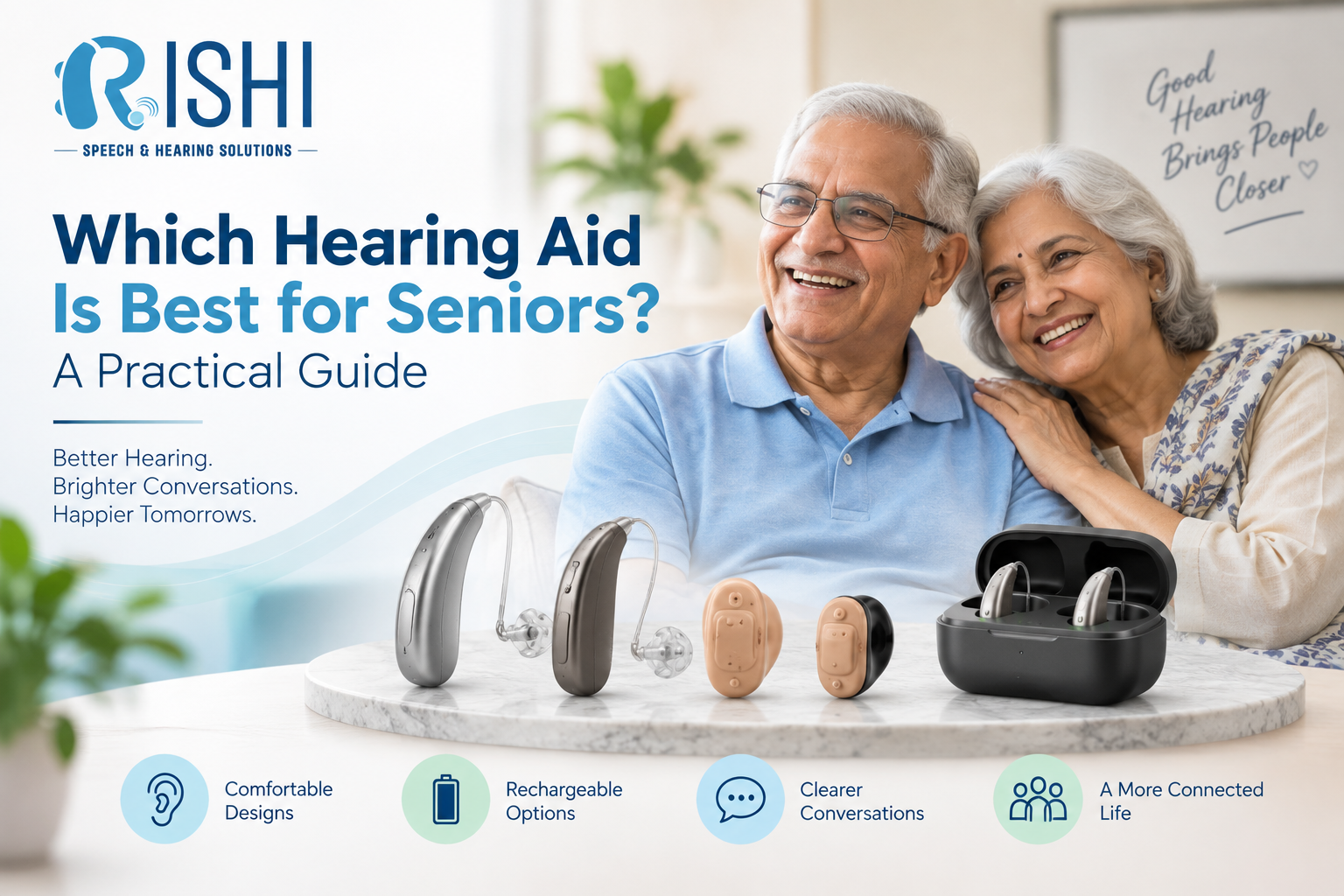
Hearing loss becomes more common as we age, and it often creeps in so gradually that it’s easy to dismiss at first. Maybe you have noticed a parent asking people to repeat themselves more often, struggling to follow conversations at family gatherings, turning the TV volume up higher than everyone else is comfortable with, or going quiet in noisy restaurants because keeping up with the conversation feels exhausting.
If this sounds familiar, you have probably already started wondering: which hearing aid is actually best for a senior?
Here’s the honest answer: choosing a hearing aid isn’t about picking the smallest device or the most expensive one on the shelf. The right choice depends on a person’s hearing evaluation results, their day to day lifestyle, their comfort with wearing a device, how easily they can handle small objects and proper professional fitting. A device that works beautifully for one senior might be the wrong fit for another, even if they have similar hearing test results.
Key message: The right hearing aid for a senior depends on their individual hearing needs and daily lifestyle, not on a single best model that works for everyone.
What Should Seniors Look for in a Hearing Aid?
Before comparing specific hearing aid types, it helps to understand the factors that actually matter for day to day comfort and usability.
1. Ease of Use
Look for simple, intuitive controls, an easy to reach volume adjustment, clearly marked buttons and a straightforward process for turning the device on and off. Also consider whether charging (placing the device on a dock overnight) or battery replacement (handling small disposable batteries) will be easier for that particular person.
2. Comfortable Fit
A hearing aid that’s uncomfortable will end up sitting in a drawer rather than in the ear. Look for a lightweight design and a proper physical fit that stays comfortable through extended daily wear, not just for a few minutes in the clinic.
3. Speech Understanding
One of the most common complaints seniors have is difficulty following conversations, especially in noisy environments like restaurants, family gatherings, or crowded rooms. A hearing aid’s ability to support clear speech understanding in these real world situations matters more than its size or appearance.
4. Battery or Rechargeable Options
Traditional hearing aids use small disposable batteries, while newer models offer rechargeable options. For seniors who may find tiny batteries fiddly or difficult to insert, a simple rechargeable charging routine can make a real difference in daily convenience.
5. Connectivity
Many modern hearing aids offer Bluetooth compatibility, allowing direct phone call audio or TV/audio streaming where supported. This can be a meaningful quality of life feature for seniors who spend a lot of time on calls with family or watching television.
6. Maintenance and Support
Consider what ongoing support looks like: regular cleaning, periodic servicing, programming adjustments as hearing changes over time and easy access to follow up appointments with an audiologist.
Which Type of Hearing Aid Is Best for Seniors?
This is usually the main question families and seniors want answered, so let’s compare the common types directly.
| Hearing Aid Type | Ease of Handling | Visibility | Suitable For | Key Consideration |
|---|---|---|---|---|
| BTE (Behind the Ear) | Easy | More visible | Many types of hearing loss | Larger design |
| RIC (Receiver in Canal) | Relatively easy | Less visible | Many adults with mild severe loss | Small components |
| ITE (In the Ear) | Moderate | Less visible | Various hearing losses | Custom fit |
| CIC (Completely in Canal) | More difficult | Very discreet | Selected hearing losses | Small size can affect handling |
| Rechargeable models | Very convenient | Depends on style | Seniors who prefer easy charging | Requires regular charging |
Important: There’s no single hearing aid type that’s universally best for every senior. What works well depends entirely on that individual’s hearing assessment results, ear anatomy, dexterity and practical daily needs, which is exactly why a proper evaluation should always come before a purchase decision.
BTE Hearing Aids for Seniors
What Are BTE Hearing Aids?
BTE (Behind the Ear) hearing aids sit behind the ear with a small tube or wire connecting to an earpiece inside the ear canal. They’re among the most established and widely used hearing aid designs.
Why Seniors May Consider BTE Hearing Aids
- Generally easier to handle than very small, discreet devices
- Suitable for a wide range of hearing loss levels, including more significant loss
- Durable design options built to withstand daily handling
- Easier cleaning and maintenance compared to smaller in ear models
Things to Consider
BTE devices are more visible than smaller alternatives, and like any hearing aid, they require proper fitting and periodic adjustment by an audiologist to perform well.
Learn more about our Digital Hearing Aids options.
RIC Hearing Aids for Seniors
What Is a RIC Hearing Aid?
RIC (Receiver in Canal) hearing aids are similar to BTE devices but with the speaker (receiver) placed directly in the ear canal, connected to the main unit behind the ear by a thin wire. This design tends to be smaller and lighter than traditional BTE models.
Potential Benefits
- Smaller, less noticeable appearance than BTE devices
- Lightweight and comfortable for many wearers
- Can offer a more natural sound experience depending on the fitting
- Suitable for many different hearing loss profiles
What Seniors Should Consider
The smaller components involved can be harder for some people to handle, particularly those with reduced dexterity and like all hearing aids, they require regular maintenance to function well.
Rechargeable Hearing Aids for Seniors
Why Rechargeable Hearing Aids May Be Convenient
For many seniors, rechargeable hearing aids solve a genuinely practical daily problem:
- No frequent battery replacement to manage
- A simple charging routine, place the device on its dock overnight, much like a phone
- Especially useful for people who find tiny disposable batteries difficult to handle or insert
Are Rechargeable Hearing Aids Right for Every Senior?
Not automatically. It depends on a few practical factors: whether the person has a consistent daily routine that includes charging the device overnight, how the specific device’s battery performs through a full day of use, the hearing aid style being considered, individual hearing requirements and simple personal preference.
Learn more about our Rechargeable Hearing Aids options.
What Hearing Aid Features Are Most Useful for Seniors?
Rather than listing technical specifications for their own sake, here’s what these features actually mean in daily life.
Automatic Sound Adjustment
Many modern hearing aids can automatically adapt their settings as a person moves between different listening environments, for example, adjusting between a quiet room and a noisy restaurant without requiring manual changes.
Noise Management
Built-in noise management features help make speech clearer in noisy environments, which is often one of the biggest daily frustrations for people with hearing loss.
Directional Microphones
These microphones are designed to focus more on sounds coming from a particular direction, typically the person someone is facing, which can make one on one conversations easier to follow in a noisy room.
Bluetooth Connectivity
This allows the hearing aid to connect directly to a smartphone or television, so calls and audio can be heard more clearly through the device itself.
Rechargeable Battery
As covered above, this simply removes the daily or weekly task of replacing small disposable batteries.
Remote Adjustments
Where supported, some hearing aids allow an audiologist to make certain programming adjustments remotely, which can reduce how often an in person visit is needed for minor tweaks.
How Do You Choose a Hearing Aid for an Elderly Parent?
This is one of the most common situations families find themselves in, trying to make the right choice on someone else’s behalf.
Start With a Hearing Test
A proper hearing assessment should always come before choosing a specific device. Without it, any recommendation is essentially a guess rather than a fitting based on actual hearing loss levels.
Consider Their Daily Routine
Ask a few honest questions about their lifestyle:
- Do they spend a lot of time with family or in group settings?
- Do they attend social gatherings regularly?
- Do they use a smartphone?
- Do they watch TV frequently, and at what volume?
- Do they spend time outdoors?
- Do they struggle particularly in noisy environments?
Consider Their Ability to Handle Small Devices
For some seniors, especially those with reduced dexterity or vision changes, tiny devices may be difficult to insert correctly, and small batteries may be genuinely hard to replace. In these cases, a slightly larger device with easier controls may actually serve them better than the most discreet option available.
Consider Their Preferences
Finally, factor in their personal preferences around visibility, comfort, whether they’d prefer rechargeable convenience, connectivity needs and budget. A device nobody wants to wear, however technically advanced, won’t help anyone.
Should Seniors Choose Invisible Hearing Aids?
It’s a common assumption that smaller automatically means better, but that’s not necessarily true. The right choice depends on several individual factors:
- The severity of the hearing loss
- The person’s ear anatomy
- Their dexterity and ability to handle small components
- How easy the device is to maintain
- Overall comfort during extended wear
- How well the specific device performs for that person’s hearing needs
A completely invisible device might be the wrong choice for someone with more significant hearing loss or reduced hand dexterity, even if it’s the most discreet option on paper.
How Much Do Hearing Aids Cost for Seniors?
There isn’t one universal price that applies to every senior’s situation. Cost typically varies based on several factors:
- The hearing aid style chosen (BTE, RIC, ITE, CIC)
- The technology level and features included
- Whether the device is rechargeable or battery powered
- Connectivity features like Bluetooth
- Any customization required for a proper fit
- Professional fitting and follow up care included in the price
What Should Be Included in the Cost?
Before deciding based on price alone, it’s worth asking whether a quoted price actually includes the full picture:
- The initial hearing assessment
- Hearing aid fitting
- Programming to the individual’s hearing profile
- Follow-up adjustments as needed
- Cleaning and maintenance guidance
- Warranty coverage
- Ongoing after sales support
See our detailed guide on Hearing Aid Cost in Bangalore for a fuller breakdown.
Why Professional Hearing Aid Fitting Matters for Seniors
A hearing aid is only as good as its fitting. This is where an audiologist’s role becomes essential, not just in selling a device, but in:
- Assessing hearing ability through proper diagnostic testing
- Understanding the person’s specific listening needs and lifestyle
- Recommending genuinely suitable options rather than a generic solution
- Physically fitting the device correctly
- Programming and fine tuning it to the individual’s hearing profile
- Teaching the user how to operate, insert, and care for the device
- Providing ongoing follow up support as hearing or comfort needs change
Simply purchasing a hearing aid online without this process is not the same as a proper, professionally fitted device and it often leads to poor results, discomfort, or the device being abandoned altogether.
Common Mistakes Seniors Should Avoid When Buying Hearing Aids
Choosing Based Only on Price
The cheapest option isn’t always the right one if it doesn’t match the person’s actual hearing loss or comes without proper fitting and support.
Choosing the Smallest Device
As covered earlier, the most discreet option isn’t automatically the best fit for every hearing loss level or every person’s dexterity.
Buying Without a Hearing Test
Skipping the assessment means the device selection is essentially a guess.
Ignoring Comfort
A device that’s uncomfortable to wear will end up unused, regardless of how advanced its technology is.
Not Considering Daily Lifestyle
A hearing aid should match how a person actually spends their day, not just how they’ll use it during a quiet clinic visit.
Not Asking About After Sales Support
Ongoing servicing, adjustments, and support matter just as much as the initial purchase.
Expecting Immediate Perfect Hearing
Adjusting to hearing aids takes time and expecting instant, flawless results can lead to unnecessary frustration.
How Long Does It Take to Get Used to Hearing Aids?
Adaptation time varies from person to person. A few things are generally true:
- Sounds may initially seem different, unusually loud, or even slightly artificial as the brain readjusts to hearing frequencies it hasn’t picked up clearly in a while
- Consistent, daily use tends to help with this adjustment process over time
- Proper programming and follow up visits can make a meaningful difference in how quickly someone adapts
- If discomfort or difficulty persists beyond the initial adjustment period, it’s worth discussing this with a hearing-care professional rather than assuming it will resolve on its own
How to Maintain Hearing Aids
Clean Them Regularly
Wipe down the device daily to remove earwax and debris that can affect performance.
Keep Them Away From Excess Moisture
Avoid wearing them in the shower, while swimming, or in heavy rain unless the specific model is rated for moisture resistance.
Store Them Properly
Use a proper case when not in use and keep them away from extreme heat or direct sunlight.
Charge Them Correctly
For rechargeable models, get into a consistent daily charging routine, ideally overnight.
Schedule Professional Maintenance When Needed
Periodic servicing by an audiologist helps catch small issues before they affect performance.
When Should a Senior Have Their Hearing Tested?
Consider booking a hearing test if you notice any of these signs:
- Frequently asking others to repeat themselves
- Difficulty understanding speech, especially in groups
- Increasing the TV volume beyond what others find comfortable
- Difficulty hearing clearly on the phone
- Trouble following conversations in group settings
- Avoiding social situations because keeping up with conversation feels difficult
- Family members noticing hearing difficulties before the person does
If any of this sounds familiar, the right next step is a professional hearing assessment, not guessing at the problem or assuming it will pass.
Frequently Asked Questions
Which hearing aid is best for senior citizens?
There’s no single best hearing aid for all seniors, the right choice depends on the individual’s hearing test results, lifestyle, dexterity and personal comfort preferences, which is why a professional evaluation should come first.
Are rechargeable hearing aids good for seniors?
For many seniors, yes, rechargeable models remove the hassle of handling small disposable batteries. However, suitability still depends on the person’s daily routine and the specific device chosen.
Are BTE hearing aids suitable for elderly people?
BTE hearing aids are often easier to handle than very small, discreet devices and can support a wide range of hearing loss levels, making them a common and practical choice for many seniors.
Are hearing aids difficult for seniors to use?
Modern hearing aids are generally designed to be user-friendly, though device size and dexterity requirements vary. A hearing care professional can recommend a model that matches the person’s ability to handle it comfortably.
Should seniors get a hearing test before buying hearing aids?
Yes, a proper hearing assessment should always come before selecting a device, since it determines the type and level of hearing loss and guides which hearing aids are actually suitable.
How much do hearing aids cost in Bangalore?
Costs vary depending on the hearing aid style, technology level, features, and whether fitting and follow up care are included. It’s best to get a personalized quote after a hearing evaluation.
How long does it take to adjust to hearing aids?
Adjustment time varies by individual, but consistent daily use along with proper programming and follow up visits generally helps the process go more smoothly.
Can seniors wear hearing aids all day?
Many people do wear hearing aids throughout the day once they’ve adjusted to them, though it’s worth discussing daily wear duration with your audiologist, especially during the initial adaptation period.
Are smaller hearing aids better for seniors?
Not necessarily. Smaller, more discreet hearing aids aren’t automatically the better choice, the right fit depends on hearing loss severity, ear anatomy and the person’s ability to handle small devices.
How often should hearing aids be serviced?
Regular servicing schedules vary by device and usage, but periodic professional maintenance helps ensure hearing aids continue performing well and lasts longer.
Final Takeaway
The best hearing aid for a senior isn’t a single specific model or brand, it’s the one that genuinely matches their hearing needs, daily lifestyle, comfort preferences, ability to handle the device and personal choices around visibility and connectivity.
A proper hearing assessment and professional fitting are the best starting points for figuring out what that actually looks like for you or your loved one.
Need Help Choosing a Hearing Aid?
If you or a family member is experiencing difficulty hearing conversations, watching TV, using the phone, or following conversations in noisy places, consider getting a professional hearing evaluation.
Rishi Speech & Hearing Solutions Basaveshwar Nagar & T. Dasarahalli, Bangalore
☛+91 94810 40991
Book a hearing assessment and discuss the right hearing solution for your needs.